記事: Linen, Silk & Crepe: A Fabric Guide for UAE Weather
Linen, Silk & Crepe: A Fabric Guide for UAE Weather
Ask five people what "good fabric" means and you'll get five different answers. Some mean how it feels against skin. Some mean how it photographs. Some mean how it survives a Dubai afternoon without wilting by 3pm. In UAE weather, that last one matters more than almost anywhere else.
Fabric choice isn't a small decision — it determines how a piece breathes, how it drapes, how often you'll actually reach for it, and how well it holds up over years of wear rather than weeks. Here's a practical breakdown of the three fabrics we work with most, and how to choose between them.
Why Fabric Matters More Here
In a climate where temperatures regularly climb past 40°C and humidity clings to everything, a fabric's performance isn't a nice-to-have — it's the difference between a piece you wear on repeat and one that sits in the closet from May to September. Breathability, weight, and how a fabric handles both movement and sweat all become far more important than they'd be in a milder climate.
That's before you even get to how a fabric looks. The best warm-weather fabrics also tend to be the most forgiving — they drape rather than cling, and they photograph beautifully precisely because they move.
Linen
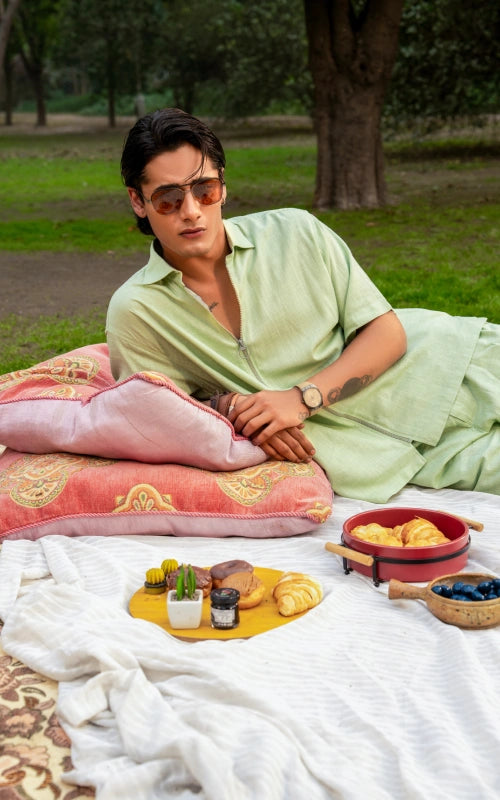
What it's like: Linen is a natural fiber woven from the flax plant, and it's one of the oldest fabrics in human history for a reason. It's breathable, lightweight, and gets softer — not weaker — with every wash.
Best for: Daytime wear, travel, anything that needs to hold up through heat and movement. Linen is the fabric equivalent of a good pair of jeans: low-maintenance, high-reward, and better with age.
The trade-off: Linen wrinkles. This isn't a flaw so much as a personality trait — a "lived-in" crease is part of what makes linen look intentional rather than sloppy, but if you want something crisp for every hour of the day, it's worth knowing going in.
How it wears through a Dubai day: Linen is arguably the single best fabric for UAE heat. It allows air to move against skin in a way few other fabrics can, which is exactly why it's been a warm-climate staple for thousands of years, long before air conditioning existed.
Silk (Including Armani Silk)
What it's like: Silk is a protein fiber, produced by silkworms, prized for centuries for its smooth hand-feel and natural sheen. "Armani silk" refers to a specific weight and finish of silk — typically a matte-finish, fluid silk with excellent drape, popularized by the fashion house's use of it in tailored pieces. It's heavier than a typical silk charmeuse but still fluid enough to move beautifully.
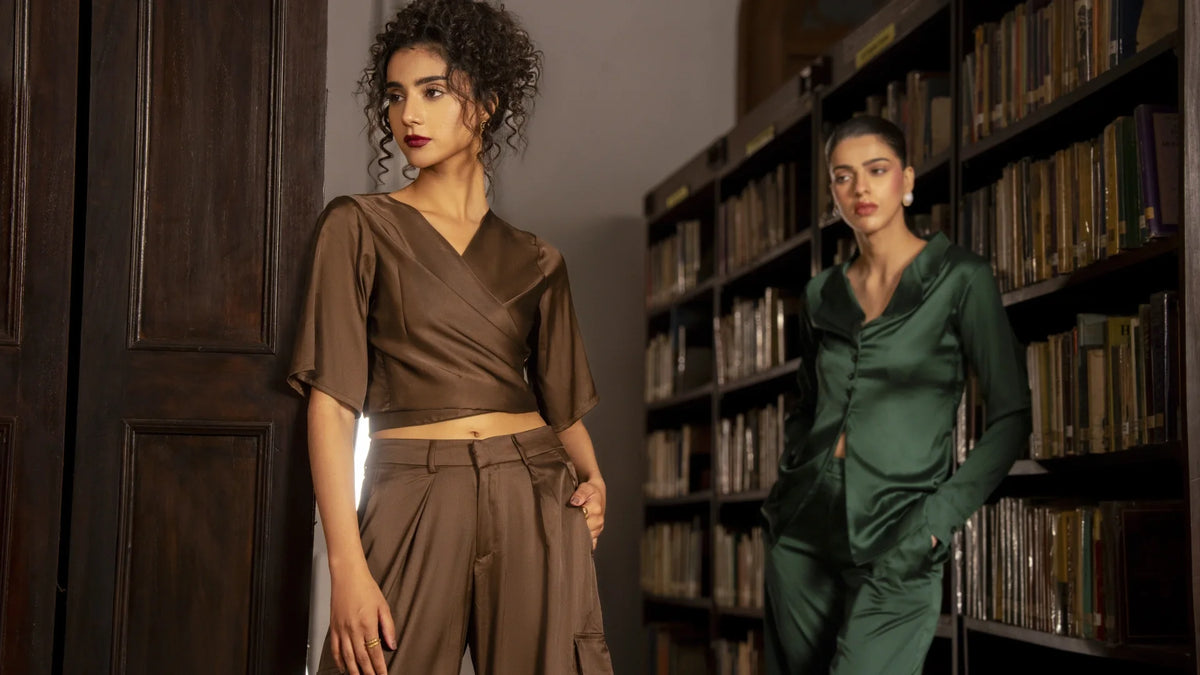
Best for: Occasion pieces, evening wear, anything where drape and movement matter as much as the silhouette itself. Silk co-ord sets and dresses photograph exceptionally well because the fabric catches and reflects light in a way synthetic fabrics can't replicate.
The trade-off: Silk requires more care than linen — hand-washing or dry cleaning is usually recommended, and it's less forgiving of direct sun exposure for extended periods.
How it wears through a Dubai day: Silk is naturally temperature-regulating — it can feel cool against skin in heat and insulating in cooler air conditioning, which makes it surprisingly practical for a day that moves between an outdoor terrace and an over-air-conditioned mall or office.
Crepe
What it's like: Crepe refers to a textured weave rather than a specific fiber — it can be made from silk, polyester, or blends, and is defined by its slightly crinkled, matte surface. It has more structure than silk charmeuse but still moves well.
Best for: Tailored pieces that need to hold a silhouette — structured trousers, fitted tops, pieces where you want the fabric to skim the body rather than cling to it.
The trade-off: Because it has more structure, crepe can run slightly warmer than linen depending on weight and fiber content — worth choosing a lighter-weight crepe for daytime UAE wear.
How it wears through a Dubai day: Crepe's structure makes it excellent for pieces that need to look polished from a 9am meeting through an evening event without losing shape — one of the reasons it's a favorite for tailored co-ord sets.
Quick Comparison
| Fabric | Breathability | Formality | Care | Best Occasion |
|---|---|---|---|---|
| Linen | Highest | Casual–smart casual | Low-maintenance, machine washable | Daytime, travel, brunch |
| Silk | High | Elevated–formal | Hand wash/dry clean | Evening, special occasion |
| Crepe | Moderate | Smart casual–formal | Dry clean recommended | Office, tailored daywear |
Choosing by Fabric, Not Just by Look
If you're building toward the kind of wardrobe where every piece earns its place, it helps to shop by fabric first and silhouette second. Ask what a piece needs to do — survive a full humid day outdoors, hold a tailored shape through a long meeting, or move beautifully under evening light — and let that answer point you to linen, crepe, or silk before you even look at cut or color.
Every Farzana Shah piece is made to order using one of these three fabrics, chosen deliberately for what each design needs to do. A few places to start:
• The Leisure Edit — linen sets built for warm-weather ease
• Refined Hours — structured silk and crepe pieces for polished daywear
• Classic in Motion — silk pieces designed to move through day into evening
Good fabric doesn't need to shout about itself. It just needs to work — through the heat, through the wash, through the years. That's the whole point of choosing well.

Farzana Shahが執筆